Wombats at Hamerton Zoo Park

Recently we got asked to make the habitat for an animal which we have never worked with before. New animals are always exciting because its kind of cool to be able to ‘tick them off the list’ Some animals are even more exciting than others though.

There is something special about Australia for many of us Brits and ones with an interest in plants and animals, maybe more so. Australian fauna is strange. The animals don’t seem to fit with the other ones around the world and if they do have similarities, they will also have some strange difference like a pouch for their young for instance. You know, kangaroos could easily have come from the same evolutionary branch as rodents or lagomorphs but they didn’t. They are totally unconnected, at least not in recent evolutionary history. I know it’s because how the land masses separated but it’s still weird. And interesting.

Wombats

When Hamerton Zoo Park contacted me and told me about their plans to bring some mainland wombats from Darling Downs Zoo, Queensland, my first thoughts were that they would be the only ones in the U.K. I knew this because a year before, I had visited Australia Zoo and viewed the environment they had built for the species there. I remember thinking what an interesting animal and it would be cool to work with these. It turns out that no wombats have been in the UK for over thirty years and the last ones had been at London Zoo in 1985. So imagine my enthusiasm when I realised that not only was it a new species for us but it was also Australian and the only ones (here at least).

The build

There wasn’t too much to design as HZP had a clear plan for what was expected. A series of 4 off exhibit tunnels leading to sleeping chambers (with special viewing windows for the public) and an open paddock separated by a semi-transparent fence. The building, which was a new structure built especially for the exhibit, had low concrete block walls which needed to be themed and beautified.

Panorama of Australian Aviary at Hamerton Zoo Park
Wombat enclosure in context with Outback Aviary. Photo © Rob Cadd.

Earthbank theming

Wombats can climb (not very well) so part of the brief was to make the low walls unclimbable for a large heavy lump animal with short legs. Where they are not great at climbing they make up with digging. They spend a lot of their time digging when they are not sleeping which is the rest of the time. It was decided to theme the walls as eroded earth bank which would fit in well with the natural habitat and also compliment the look of the enclosure due to their fondness of earth moving. Each wall would have a slight overhang and the top of the fake earth bank would also incorporate an irrigated planter. Mixing planting with theming really adds to the naturalness of zoo habitats and I always encourage this in the design stage.

Wombat in front of themed earthbank with trailing foliage.
Photo © Rob Cadd.

We set to work and built a steel armature to resemble the eroded earth bank we had in mind and carefully made the shapes in a way that the animals would not be able to get a foothold and escape. You have to think carefully when adding relief, it has to look natural but also serve a practical purpose. We sprayed on two thick layers of our standard shotcrete and made any extra texture by manipulating the wet concrete with water from a hose. Final colours were achieved with UV stable acrylic paints sprayed over several watered down layers in a wash method to achieve the look of the crumbling earth. Then it was a long wait until the animals arrived. The wait was worth it though when we saw these beautiful animals enjoying their new surroundings.

Massive thanks to Hamerton Zoo Park for having us (It feels like our second home and we are always made super welcome!) and Rob Cadd for his excellent animal shots.

Wombat in front of themed earthbank.
Photo © Rob Cadd.
Wombat in themed zoo habitat
Photo © Rob Cadd.
wombat in front of themed earthbank.
Photo © Rob Cadd.
Wombat in sleeping burrow.
Viewing window into sleeping burrow. Photo © Rob Cadd.
Wombat in themed zoo habitat
Photo © Rob Cadd.
Wombat in natural looking zoo exhibit.
Photo © Rob Cadd.


London Sealife Aquarium Rainforest Adventure

Koda Creative were contracted by Aquarium Technology Ltd to provide the theming for a recent area refurbishment in London Sealife Aquarium.

We provided some trees and rockwork in the new Rainforest Adventure.

Here are some pictures of progress in the Cuban crocodile (Crocodylus rhombifer) habitat. In here we built some imitation kapok (Ceiba pentandra) trees. We also modified the original theming to create easy water access for the crocodiles and provided raised basking areas.

Check out a similar project we did in Bristol Zoo.

london-aquarium-crocodile-tree-2 london-aquarium-crocodile-tree-3

Macduff Marine Aquarium kelp tank renovation

View into the twilight world of the kelp tank.
A moody one. Love the urchins! Photo courtesy of Claire @MMA

Main Contractor: Aquarium Technology LTD
Theming contractor: Koda Creative

We were thrilled to be asked by ATL to provide the artificial rock habitat for Macduff Marine Aquarium’s recent kelp tank refurbish. This aquarium is quite remarkable as it is open topped to allow the sun to stream in and enable local kelp species to grow naturally. Koda Creative is always excited to develop habitats which include natural looking geology alongside real flora. This is the first time we have worked in a live kelp setting!

The project started with ATL and MMA staff demolishing the old theming and removing the existing waterproof layer from the aquarium. ATL then applied a new waterproof membrane and resealed the acrylic viewing windows.

Koda Creative, with the input from MMA staff then designed a rock arch similar to a real one on the nearby coastline. It was important that the new rock resembled the local geology as only local species are to be displayed here.

The armature of the new rock arch and other rock elements was then constructed out of inert plastics before being coated with marine grade sprayed concrete. As usual, the concrete was carved and textured like our reference photographs and pigmented further to match the local rock.

The filtration plumbing and life support systems (LSS) are hidden within the artificial rock. The small ‘loose’ stones you see on some of the ledges have the purpose of anchoring the holdfasts of the introduced kelp.

macduff-aquarium-theming-rockwork---1
Rock arch view from main window. The small stones on the ledges are for anchoring the kelp holdfasts.
macduff-aquarium-theming-rockwork---2
The vertical rock on back wall is hiding the pipes for the filtration (LSS)
macduff-aquarium-theming-rockwork---3
Detail of rock which was made to resemble local geology.
macduff-aquarium-theming-rockwork---4
View from upright acrylic tunnel section.
macduff-aquarium-theming-rockwork---6
Out of tank theming blends in seamlessly with the in tank theming.
Themed rock arch in aquarium
View from main window.
macduff-aquarium-theming-rockwork---5
View from upright tunnel section window.
macduff-aquarium-theming-rockwork---7
In tank and out of tank rockwork.

Bristol Zoo Crocodile habitat

Here are a few random photos from a project at Bristol Zoo, UK where we improved the Dwarf African Crocodile (Osteolaemus tetraspis) and Malayan river turtle (Orlitia borneensis) exhibits along with Aquarium Technology Ltd who were the main contractors. Pictures taken on the day the planting was being introduced and the pools being filled.

Koda Creative were contracted by ATL to spray concrete the pools, making a smooth surface to which ATL applied GRP waterproof liner. After this, we made washed out earth river bank, rockwork, two trees, fallen tree bridge, fallen tree enclosure divider and tree stump waterfall catcher. The purpose of the main tree was to hide a concrete roof support column.

Also during this project we fit in some extra work, a Chinese crocodile lizard (Shinisaurus) vivarium habitat.

bristol-zoo-crocodiles - 2
Rockwork and lichens.
bristol-zoo-crocodiles - 3
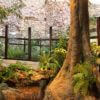
Buttress tree
bristol-zoo-crocodiles - 4
Fallen tree enclosure separator
bristol-zoo-crocodiles - 5
Tree detail.
bristol-zoo-crocodiles - 6
Tree detail.
bristol-zoo-crocodiles - 7
Tree detail.
bristol-zoo-crocodiles - 8
Tree detail.
bristol-zoo-crocodiles - 9
Fallen tree walkway.
bristol-zoo-crocodiles - 10
Rock and mudbank.
bristol-zoo-crocodiles - 11
Rock and mudbank.
bristol-zoo-crocodiles - 12
Rockwork and enclosure separator.
bristol-zoo-crocodiles - 13
Rock and mudbank.
bristol-zoo-crocodiles - 14
Crocodile habitat view.
bristol-zoo-crocodiles - 15
Zoo gardener inspecting tree stump waterfall catcher.
bristol-zoo-crocodiles - 16
Malayan river turtle pool being filled…it’s now halfway.
bristol-zoo-crocodiles - 17
Crocodile habitat view.
bristol-zoo-crocodiles - 18
Tree stump waterfall catcher.
bristol-zoo-crocodiles - 19
Planting going in!
bristol-zoo-crocodiles - 20
More plants going in!
bristol-zoo-crocodiles - 21
Ferns and palms going in!
bristol-zoo-crocodiles - 22
Public view.
IMG_0352
Crocodile habitat.

Trees for orangutans

Koda Creative was invited to join the multi skilled team at Houthoff Zoo Design to help build twelve giant trees in the new Orangutan Forest exhibit at Dublin Zoo.

The trees are copies of the kapok and banyan trees found in the Bornean orangutan’s natural habitat, the tropical rainforests of Borneo. Each tree is made from steel and concrete and the details are hand sculpted and painted. Three trees contain feeding systems which encourage the apes to climb high in search of treats. The tallest tree is 12m high and all offer climbing opportunities for these mainly arboreal animals. Some trees are connected by cables which the orangs can traverse across high above the heads of the humans below.

In the wild, these animals are losing their homes because of deforestation due to palm oil cultivation. Dublin Zoo hopes The Orangutan Forest enclosure will help highlight their plight and raise money for the Orangutan Foundation.

There is some more information about this exciting new exhibit on the Dublin Zoo website.

Read an article about the project on the Irish Independent newspaper here.

Spectacular drone footage on Dublin Zoo Facebook page here.

artificial tree in zoo exhibit
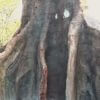
Two imitation kapok trees.
artificial tree in zoo exhibit
10m high banyon tree.
artificial tree in zoo exhibit
Banyon tree with kapok tree in foreground.
artificial tree in zoo exhibit
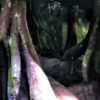
Kapok tree root system.
artificial tree in zoo exhibit
Close up of buttress roots showing lichens and bark detail.
artificial tree in zoo exhibit
12 m high kapok tree and strangler fig.

Humboldt Penguin Habitat Scheveningen Sealife Centre


Koda Creative were asked to build the artificial rock for this Humboldt Penguin habitat at Scheveningen Sealife Centre, Holland. We made 165 m2 of rock inspired by the Chilean/Peruvian coastline from where this species originates.

Architect on this project was MDM Advies
Designer of decoration/theming and project manager was Ton Van Helden

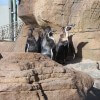
Penguins look at their new habitat.
The penguins cast their eyes over their new habitat.
Nest boxes disguised as caves in the rock.
Nesting burrows built into artificial rock.
Penguin's eye view of habitat.
Birds eye view of the Chilean coastline inspired habitat.
Birds eye view.
Planting list included this rosmarinus.
Penguin come on to dry land.
Back to dry land.
Three penguins.
Shake off!
Group of penguins in artificial habitat.
Waterfall.
words
A popular spot. Mixture of sand and rock.
words
Some interesting vantage points for the public. Come face to face with the penguins!

Penguins and artificial rock.


A penguin comes on to dry land.
Slope and steps carved into the artificial rock at strategic points.

Penguins in artificial habitat.


Group of penguins next to their pool.

Penguins at edge of pool.

View of penguin habitat
Opening day. Photo by Sven Molkenboer

Kea habitat designs #1


I am working on the habitat design for a new kea Nestor notabilis exhibit. Here is the first draft model of one of the areas.

In the model, the zoo keeper is about to hide some food treats into that tree. The tree is a replica of a wind blown specimen which you might find high up in New Zealand’s South Island Alps. It will be made from steel and shotcrete and have epoxy lined holes into which the treats can be inserted. I have just realised the zoo keeper may have a few problems getting up there so we may have to add some steps into that fake rock or put a stainless steel ladder there.

Also in this habitat, there is a stream, waterfall and pool so the keas can bathe, cool off and wash their food in. The water will be on a closed system kept clean by mechanical, bio and U.V. filtration.

Find out more about keas here via the Kea Conservation Trust of New Zealand
Model of zoo habitat for keaModel of zoo habitat for keaModel of zoo habitatModel of zoo habitatModel of zoo habitat

Rock for gundi exhibit

Gundis, sometimes known as comb rats, are small rodents which are native to North Africa. They are unusual in the fact that they don’t drink water. They get all their moisture from their food. They also like to chew stones so we a had to make a very strong mix for the artificial rock here.

We made an EPS armature (shape) and coated it with a very hard fine concrete mix. On top of this there is a finer ‘carve’ render which is given the rock texture and coloured. We also built in recesses for heat lamps. Electric conduit tubes were built within the rock so the electrician could easily connect later.

Scroll to bottom of page to see Helsinki Zoo video of Gundis in action

Thanks to zoo keeper Alina Kallio for the animal photos. Check out Alina’s and Timo’s blog here Frog Trail.

artificial rock for gundis

artificial rock for gundis

gundis in box
Photo Alina Kallio
gundis in box
Photo Alina Kallio
gundis in box
Photo Alina Kallio
gundi
Photo Alina Kallio

White Faced Sakis enjoy their new trees

We were very happy to see the white faced sakis, golden lion tamarins and pygmy marmosets using the trees we had made a few months previously. It was also good to hear that the enclosure is working as it should and now needs less keeper maintenance.

I managed to take these pictures on a sunny Sunday afternoon when we were taking a break from building the sloth tree. The weather had been so nice in Finland during this visit that the animals were spending a lot of the time enjoying the outdoor part of their enclosure. I got lucky with these ones.

I wrote about the building of these trees in a previous post.

Helsinki zoo made a small video of the animals during their first explorations (scroll to bottom of page to see this)


male white faced saki
Male white faced saki
Female white faced saki
Females
Golden lion tamarin
Golden lion tamarin moving up in the world


Artificial Tree and vines for Coco

Koda Creative often build artificial trees into zoo exhibits. They usually serve some practical purpose for instance, structural supports, places to hide or to provide enrichment possibilities. Trees are generally built from steel and fine concrete. The finish is hand carved and painted appropriately with a suitable non toxic paint.

This artificial rainforest tree was built into an existing zoo enclosure for a Hoffman’s sloth, agoutis and toucans. The tree supports semi-flexible vines which lead to feeding stations and latrine for Coco the sloth. The vines were made to exactly the right diameter for Coco’s claws to help her move around the high enclosure more easily.

Materials used:
Steel, fine concrete, our own recipe epoxy and exterior grade acrylic paint.

For other examples of our trees see:

Two Jungle trees for white face sakis

Amazon aviary


Artificial tree for sloth exhibitArtificial tree for sloth exhibitArtificial tree for sloth exhibitArtificial tree for sloth exhibit

artificial tree in zoo exhibit